
The fascinating history of caviar
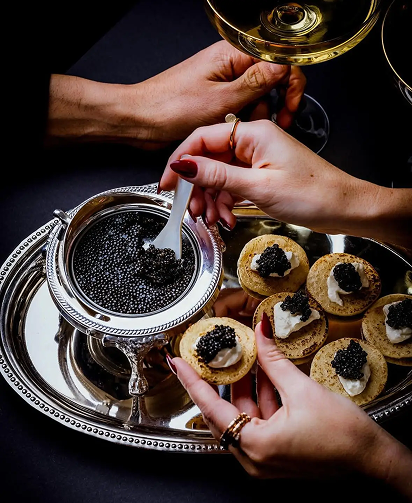
Caviar, synonymous with luxury and refinement, has a rich and captivating history that spans centuries. Derived from the roe of sturgeon, it has evolved from humble beginnings into one of the world’s most coveted delicacies.
Ancient origins
Sturgeon have swum the rivers and seas of Europe and Asia for millions of years. Fishing communities around the Caspian and Black Seas were salting and eating sturgeon roe long before it became a symbol of status. The word “caviar” itself is generally traced back to the Persian khâg-âvar, meaning “egg-bearing”.
From fishermen to royalty
Over time, caviar found its way to the tables of the powerful. In Russia it became closely tied to the imperial court and to religious feast days, when meat was forbidden but fish roe was allowed. By the nineteenth century it was established across Europe as a delicacy fit for celebrations and grand dinners.
A global appetite
As demand grew, so did the search for sturgeon. In the late 1800s, rivers in the United States were among the world’s major sources of caviar, much of it shipped to Europe. Overfishing soon followed, and wild sturgeon populations began a long decline.
Protection and a new era
By the late twentieth century, the pressure on wild sturgeon had become critical. In 1998 all sturgeon species were placed under international trade protection, and the trade in wild Caspian caviar was heavily restricted in the years that followed.
This turning point shaped caviar as we know it today. Responsible aquaculture now allows sturgeon to be raised with care over many years, protecting wild populations while preserving the craft of caviar making – from the patience of raising the fish to the skill of salting and grading every tin.
Timeless, and still evolving
Today, caviar is enjoyed far beyond the traditional banquet: at intimate dinners, at private tastings and in contemporary kitchens around the world. Its story continues to be written by those who respect both its heritage and its future.